



About Soccer Tournament
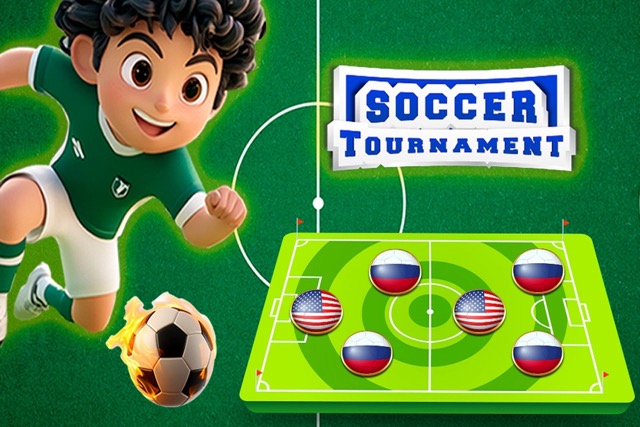
Soccer Tournament plays more like a tabletop football contest than a running match. You select a piece, drag to choose its direction and power, and release to make contact with the ball. Each turn is an opportunity to score, set up another route, or improve your defensive position.
Because the action is turn-based, you can consider more than the immediate shot. Look at where your selected piece and the ball are likely to finish, and what that would give the opponent next. A move that falls short of goal can still be useful if it creates a better position, while a hard speculative shot can leave an obvious reply.
How to Play Soccer Tournament
Click a piece, hold and drag to aim and choose power, then release. Use passes and shots to outscore the opponent while planning for the position after your turn.
- Choose a Score, Time, or available tournament mode and select a team.
- Inspect the ball, your pieces, and the open route toward goal.
- Select a piece, drag the aiming line, and release for the move.
- Wait for the turn to resolve, then reassess the entire field before your next action.
Controls & Timing
Two routes to inspect
First check how the piece will reach the ball, then consider where the ball will go after contact. A clear line from ball to goal is not enough if your selected piece cannot make the required approach.
Power and the following turn
Extra power can change more than the immediate shot. Before releasing, consider whether the resulting positions will still leave you an answer to the opponent’s next move.
Controls
| Input | Action | When to use |
|---|---|---|
| Mouse click on a piece | Select it | Begin your turn |
| Hold and drag | Aim and set power | Prepare a shot or pass |
| Release mouse button | Execute the move | Commit to the selected line |
High Score Tips
- Plan backward from the intended contact. Decide which side of the ball you need to hit, then choose the piece that can reach that side. Selecting the nearest piece automatically can limit your useful angles.
- Keep a defender relevant. Before moving a piece out of the way, check which scoring route it currently blocks. The offensive gain should justify opening that route.
- Compare power at a familiar distance. Use a few similar moves to learn how far a controlled release travels. That reference helps you judge passes without treating every turn as a maximum-strength shot.
- Review the opponent’s easiest reply. Before committing, imagine their most direct route to goal from the position you expect to leave. If it looks too easy, choose a safer contact or a different piece.
Key Features
- Piece-based football: Select discrete players rather than steering a runner.
- Turn-by-turn planning: Aim after reviewing the field.
- Direction and power control: A drag gesture prepares each move.
- Several competition modes: Score, Time, and tournament choices change the broader objective.
Frequently Asked Questions
Do I move the players with the keyboard?
The described version uses mouse selection and dragging for individual pieces. Choose the piece you want to act with, set its move, and release instead of searching for running controls.
Why is a clear goal not always a clear shot?
Your chosen piece still needs to reach the correct side of the ball. Inspect that approach first; an open net does not solve an awkward angle of contact.
Is maximum power best?
Choose enough power for the move you planned. A harder strike may send the ball or your piece into a worse position and give the opponent an easier reply.
How do I think about defense on my own turn?
Look at the lines your pieces currently block and the routes your move would open. A useful turn can protect the goal while improving the next attacking opportunity.
Gameplay Video
Finger Soccer Tournament gameplay